

Treat December 31st like an expiration date, not a suggestion. On January 1, the list is spoiled.
Do the work now and the New Year’s resolution is already underway: fewer accounts, fewer April surprises, a cleaner 2027.
If you already save and invest, skip the generic laundry list. Ask the narrower question: which decisions actually change your 2026 tax bill — or next year’s plan — while there is still time?
If you're still a high earning professional:
If you're a wealthy retiree:
For Professionals: A high year can be due to a bonus, a commission spike, vesting RSUs or exercising options. Default lean: continue pre-tax deferrals to reduce earned income, and look to harvest losses if the taxable account has them. A low year can be a job-gap or job-change, a sabbatical, or a move to a lower-paying role or reduced bonuses. That is when Roth contributions and conversions earn their keep.
For Retirees: A high year is a large IRA withdrawal, a home sale, a Roth conversion that overshot, or two Social Security checks landing in a year you also took a lump sum. A low year is the window after work stops and before SS & RMDs start — often the best conversion years you will ever get. If RMDs have already begun, “low year” usually means keeping extra income off the return so IRMAA and taxation of Social Security don’t stack.
Pro tip- identifing low income years & high income years allows for planning and tax flexibility, regardless of your life stage.
What you need to know: what came in, and what it costs to run the household. An estimated range beats a forensic audit.
Professionals: Start with take-home, then add the money that does not show up every month — bonus, RSUs sold, etc. Check the last three months of cedit cards and the your savings account. Look for lifestyle creep: did the pay raise get spent before it hit savings? Decide now what share of the December bonus goes to the 401(k), estimated taxes, and the taxable account. “We’ll see how the year ends” is how a $40k bonus becomes a kitchen and a tax bill.
Retirees: Ignore the old paycheck math. Write down 6–12 months of spending you actually intend to live on, including travel, insurance, and the irregular stuff (gifts, roof, new car). That cash should not be dependant upon on a good stretch in the in the stock market. Then map which account will fund it in 2027: cash, brokerage, IRA, or Social Security. If those sources don’t add up without a large IRA hit, its time to revisit your plan.
These expire. That is why year-end is different from “someday.”
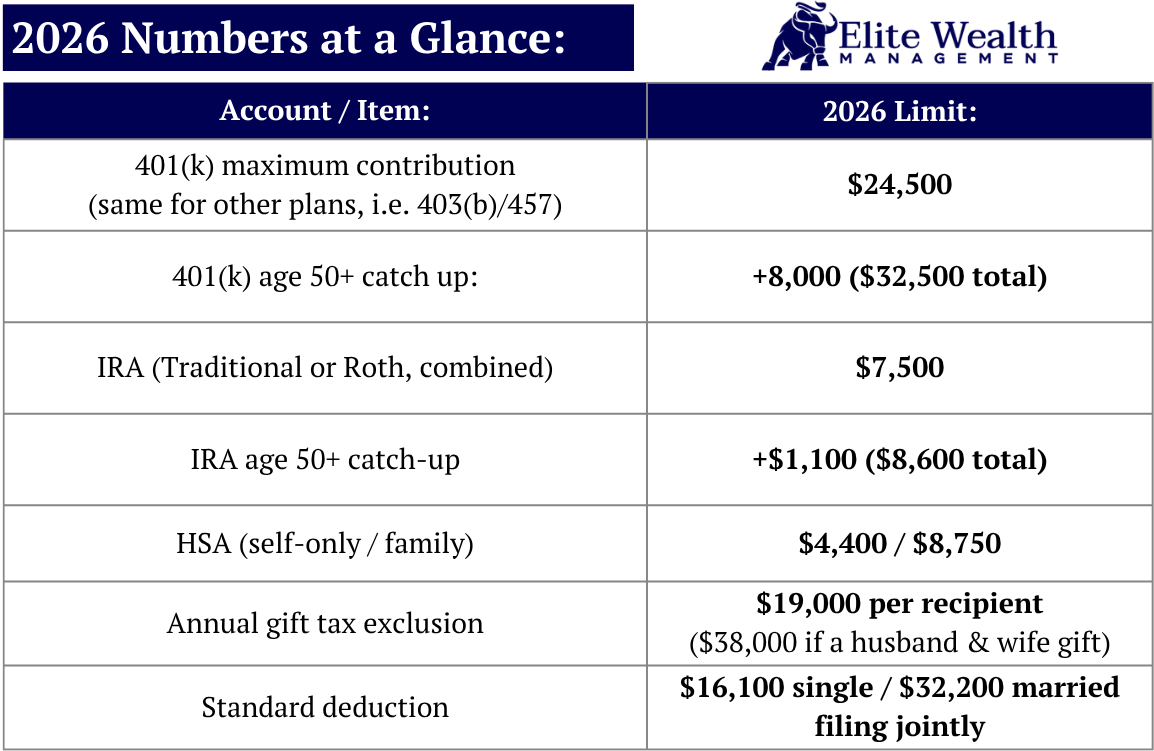
Professionals: This is usually the biggest lever you have left in 2026. $24,500 employee deferral; $32,500 at 50+; ($35,750 at 60–63 if the plan allows). Confirm whether your catch-up must be Roth under the SECURE 2.0 rule for higher earners (prior-year FICA wages over the threshold). If you have a mega backdoor Roth or after-tax 401(k) window, December is when people remember it exists — usually too late to set up, but not too late to use if it is already on.
Retirees: Skip this unless you still have consulting or part-time W-2 income and a plan that accepts deferrals. A small Solo 401(k) or SEP can still matter if you have self-employment income. Don’t open a plan in December as theater. Do it if there is real earned income to shelter.
Professionals: If you have a qualifying high deductible healthcare plan, fund it. $4,400 self / $8,750 family, plus $1,000 at 55+. Pay current medical bills from cash if you can and let the HSA run. It is the only account that can be deductible in, tax-free while it grows, and tax-free out for qualified medical costs — and it has no RMD later.
Retirees: You generally cannot contribute unless you are in an HDHP and not enrolled in Medicare. If an old HSA is still sitting there, treat it as a medical reserve or a stealth retirement account. Don’t let it become another forgotten login.
Professionals: Its common to have gains from sold RSUs or concentrated stock. Harvest losses (if possible) to offset them. Unused losses can offset $3,000 of ordinary income and carry forward. Watch the wash-sale rule if you buy the same thing back in the 401(k).
Retirees: Harvesting still works, but the better question is often which lot to sell for living expenses. Selling appreciated stock can be cleaner than taking an extra IRA withdrawal that lifts AGI, IRMAA, and the tax on Social Security. Sell with the intention to prepare for next year’s spending.
Must be done by December 31!
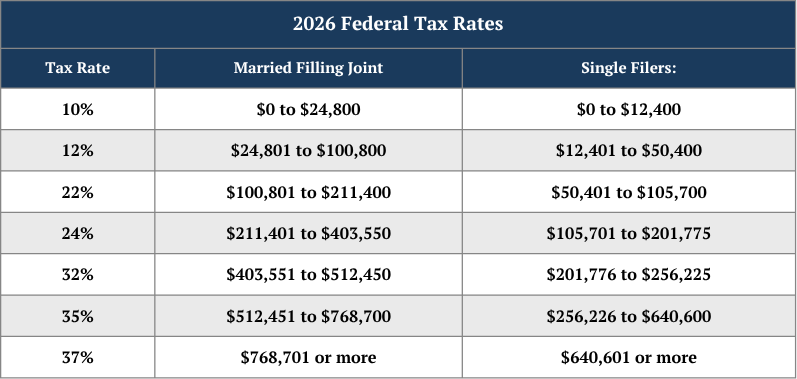
Professionals: Usually a bad fit in a strong earnings year. The exception is a temporarily low year, or filling a bracket with a small conversion if you already maxed the 401(k) and still want tax-free room later. Don’t convert into a 32% or 35% year because a blog said "Roth is always better".
Retirees: This is often the main event. In the gap before RMDs, converting a slice each year can shrink future required withdrawals and leave heirs a cleaner account. Run the tax bill first: A conversion that pushes you into a higher IRMAA bracket can cost more than the “tax-free growth” story advertised. Partial conversions beat heroic ones.
Professionals: Irrelevant unless you inherited an IRA. Inherited-account rules are their own calendar. Don’t ignore a deadline on someone else’s IRA because you are still working.
Retirees: If RMDs apply (age 73 for many; 75 if born in 1960 or later), take them. The penalty for missing is ugly. If you are 70½+ and already give to charity, a QCD from the IRA can satisfy part or all of the RMD without raising AGI. That is often better than writing a check and hoping you itemize. Coordinate QCDs before the RMD is fully distributed, or the paperwork gets sloppy.
Professionals: If you itemize — or could itemize by bunching two years of donations into 2026 — gifting appreciated stock beats cash. Annual exclusion gifts of $19,000 per person ($38,000 if you gift-split) are useful for helping kids with a house or 529 without making it a tax event.
Retirees: Same gift limits. The more interesting tool is often the QCD, not the checkbook. If the estate is already larger than the kids need in one lump, 2026 gifts and a funded DAF can start moving money while you can still see it used. The lifetime exemption is $15 million per person this year — relevant for large estates, not for a $19,000 check to a grandchild.
Scattered accounts from previous jobs, old rollovers, and a random stock grants create cluuter. List every account as after-tax, tax-deferred, or tax-free. Then pick a home (I use Schwab), and begon the consolidation process. One login beats five.
Professionals: The mess is usually three old 401(k)s and a brokerage account that became a parking lot for RSUs. Roll the old plans and get align the portfolio with your needs. “I haven’t logged in since 2017” is not a badge of honor. Build your 2027 savings plan: 401(k) first to get any match, then consider brokerage and/or Roth (perhaps a backdoor). If one company's stock is now a third of net worth, make a plan to minimize that risk...
Retirees: The mess is usually a Traditional IRA that is too large, a taxable account with low-basis stock, and three beneficiaries who don’t match the will. Rebalancing robotically after a good year or an ugly year — now is not the time to redefine your investment approach. The investment question that matters: which account funds 2027 spending so you are not selling positions against your will. Use cash for near-term bills, & taxable brokerage for any discretionary needs. Use IRA dollars last, unless RMDs or QCDs already require it. That order is a solid starting framework.
If you do not have estate documents, get them done. If you do, verify beneficiaries on every account. Those names override the will. A trust can be the default for jointly held and taxable assets so they avoid a messy probate. Retirement accounts are different: spouse first on IRAs and 401(k)s, trust as backup. That keeps the rollover option intact and still lands the account in the plan if something happens to both of you.
Professionals: A typical landmine is an ex-spouse still listed on an old 401(k), or kids named on one account and the trust named on another. Life insurance and TOD/POD designations should match the plan, not the last HR packet you signed. If you have minor children, “my spouse, then the kids” without a guardian and trust conversation is incomplete. Fifteen minutes on the plan website now is cheaper than a court later.
Retirees: This is not paperwork. It is the plan. Confirm primary and contingent beneficiaries on every IRA, 401(k), annuity, and insurance policy. If the trust is supposed to own the house or the brokerage account, check the title — a trust that was never funded is a binder on a shelf. Widows and widowers should not wait for a “better time” to retitle and reset beneficiaries. If you want a child to receive an IRA over time, the beneficiary form has to say so. The will cannot fix a blank form.
Schwab Users: quickly verify/update your beneficiaries by logging in → Accounts → Profile & Settings (or Beneficiaries, depending on account type) → update Designated Beneficiaries → e-sign. Joint taxable accounts may use TOD instead. Repeat the process for any leftover employer plans. Stay on the phone until the confirmation is in writing.
A simple Q4 sequenceSame order we use with clients in October–December. The emphasis shifts.Professionals
Retirees
Money is emotional and messy. Organization can seem overwhelming. The to-do list is actually short, but it must be done before December 31. While this guide won't solve all of you problems, it will at least get you started. Getting a handle on your cashflow, tax rate, investments, & estate is a huge step towards achieving financial organization.

Important Disclaimer: The information provided in this guide is for educational purposes only. Nothing here within should be considered investment or tax advice. Please consult with a financial advisor and/or CPA when considering investment and tax decisions.

We generally serve families with $500k or more in retirement/investment assets. Our clients are seeking a trusted advisor to oversee investment decisions and retirement planning. Schedule a meeting to explore our services:
Schedule a Call
.png)